- What is Risk Assessment in Change Management and what is it used for?
- Why Risk Assessment is essential before approving a Change
- Which factors must be evaluated during Change Risk Assessment
- How to classify IT Change risk: levels and criteria
- How to automate Risk Assessment in Change Management with an ITSM software
- Rexpondo: the ITSM software for managing Change Requests and risk assessment
What is Risk Assessment in Change Management and what is it used for?
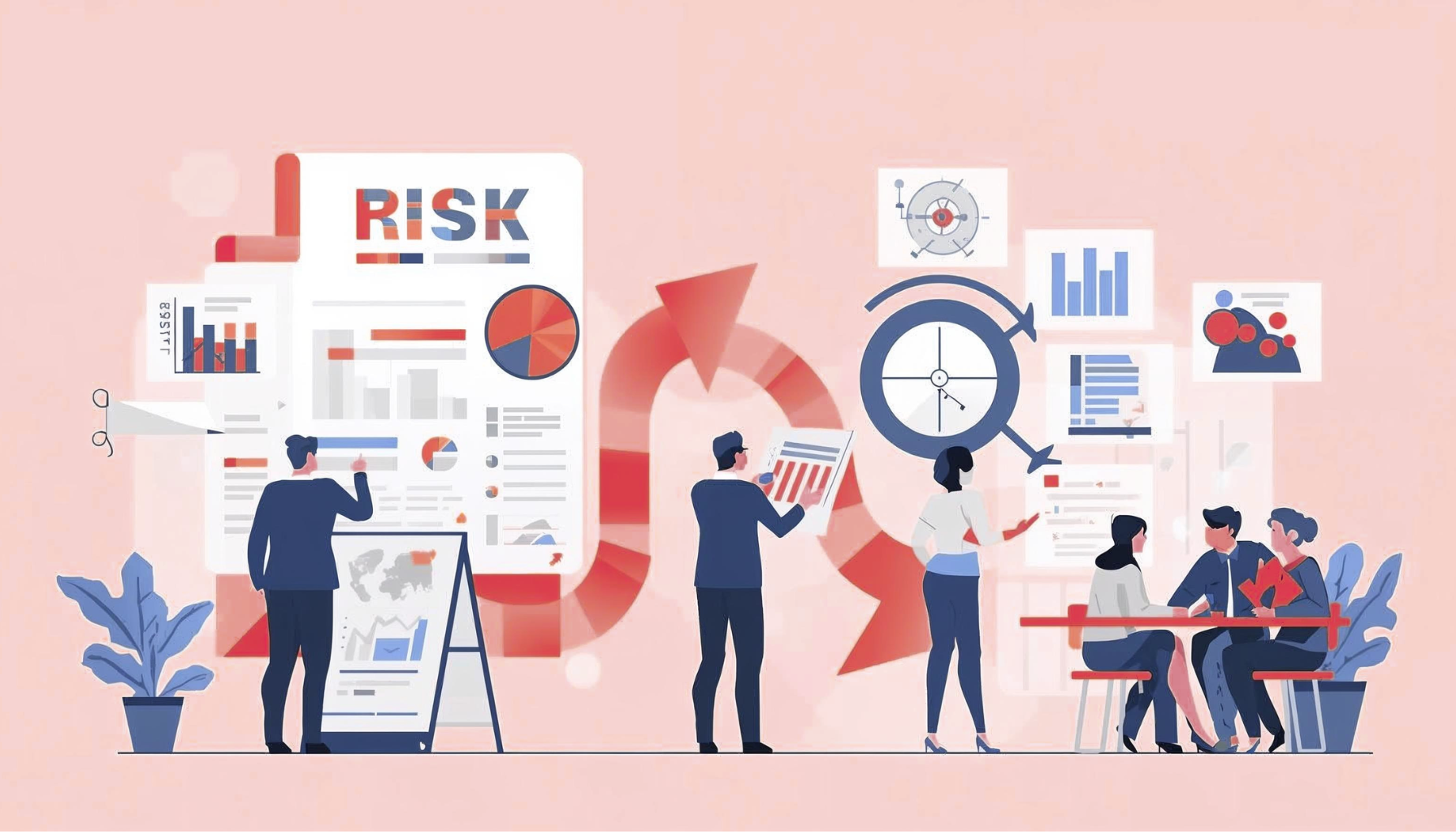
In the context of Change Management, Risk Assessment is a structured process aimed at identifying and reducing risks (related to people, processes, or technology) associated with the introduction of an organizational or IT change.
It is used to measure the impact of uncertainty against defined objectives, estimating both the probability that a negative event may occur and the consequences it could have on IT services and operational continuity.
Why Risk Assessment is essential before approving a Change
A proper risk assessment provides business decision-makers with all the necessary information to anticipate potential user resistance, identify non-obvious issues, and define effective strategies to minimize service disruptions.
Without this preventive phase, the risks of delays, low employee engagement, and possible failure of the entire transformation process increase.
Which factors must be evaluated during Change Risk Assessment
- Business impact: It consists of analyzing the operational and economic consequences of the change, measurable through indicators such as business SLAs associated with impacted items, the number of users affected, and the relevance of privacy-related regulatory requirements.
- Probability of error or malfunction: This involves estimating, on scales ranging from “unlikely” to “frequent,” the chance that the implementation may fail or generate negative effects on the system, also based on historical data or expert experience.
- Technical complexity of the change: It evaluates the technological risks associated with the Change, considering factors such as the number of Configuration Items (CI) involved, possible system integrations, and the risk of downtime.
- Availability of a rollback plan: This involves verifying the existence and effectiveness of a recovery plan, particularly analyzing the time required and the technical complexity needed to restore the system to its previous state in case of failure.
- Maintenance window and resources involved: It concerns the operational planning of the Change, including the release plan, required lead time, expected downtime, and the level of involvement of technical teams.
How to classify IT Change risk: levels, criteria, and assessment matrix
- Low risk level: Typical of Standard Changes, meaning repetitive operational interventions with already documented and tested procedures (such as creating a new server or configuring firewall rules). In these cases, impact and risk are minimal (index < 2).
- Medium risk level: Generally associated with Normal Changes, where impact and probability evaluation does not show blocking critical issues but still requires careful and intermediate risk planning (index between 2 and 3).
- High risk level: Refers to scenarios such as Emergency Changes to resolve major service disruptions or large-scale modifications exceeding critical thresholds (index ≥ 3). In these cases, approval from a higher authority such as the CAB (Change Advisory Board) is often required.
How to automate Risk Assessment in Change Management with an ITSM software
- Structured approval workflows: The use of an ITSM platform enables automation and standardization of change management processes, creating progressive approval paths that reduce manual intervention time.
- Mandatory assessment fields: Risk evaluation can be automated by configuring the software with simple but essential forms (such as expected impact or number of users affected), which automatically feed risk indexes calculated by the system.
- Traceability of decisions: An ITSM platform ensures that every change is always tracked, making it possible to reconstruct the full Change lifecycle: from initiation, to testing, through to implementation activities.
Rexpondo: the ITSM software for managing Change Requests and risk assessment
Rexpondo is a scalable platform that integrates ticketing functionalities and an advanced IT Service Management (ITSM) solution in a single environment.
Through its ITSM module, developed according to ITIL best practices, ticket management evolves into a centralized and automated IT service ecosystem, enabling processes such as Incident and Problem Management, integration with the CMDB for mapping assets and their relationships, and Change Management. This approach improves operational efficiency and reduces risks for business continuity.

