- What is a Change Request: definition and approval process
- What is a Service Request
- Change Request vs Service Request: what are the main differences?
- When should a Change Request be used? Practical IT examples
- Can a Service Request become a Change Request?
- Most common mistakes in managing Change Requests and Service Requests
- How to manage Change Requests and Service Requests with Rexpondo
What is a Change Request: definition and approval process
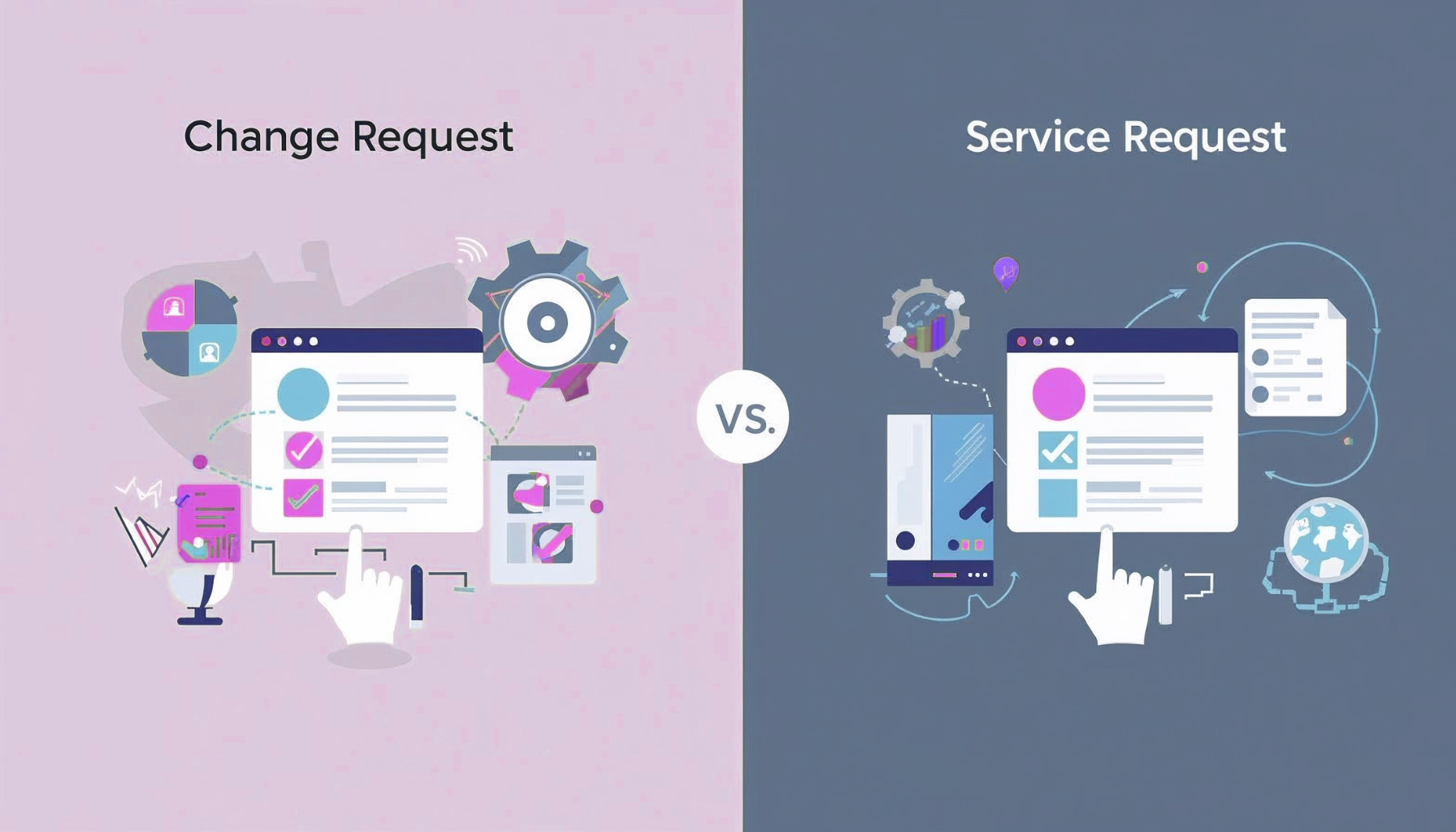
A Change Request is a formal request used to make modifications, additions, or removals to IT infrastructure, services, or software configurations. Unlike routine operational activities, this type of request can have a significant impact on business processes and involve a higher level of risk.
For this reason, changes must go through a structured analysis and approval process, which includes a preliminary assessment of potential impacts and authorization by the appropriate governing bodies, such as the Change Advisory Board (CAB).
What is a Service Request
A Service Request is a formal request through which a user asks for information, support, or access to an IT service. It generally concerns standard and recurring activities that are already defined by operational procedures and characterized by a very low level of risk.
Approval of these requests is often automated or already covered by company policies. Common examples include password resets, requests for new access permissions, or the assignment of equipment and accessories, such as a charger.
Change Request vs Service Request: what are the main differences?
The main difference between a Change Request and a Service Request lies in the impact, risk level, and approval process. Service Requests are used to handle standard operational needs and recurring user activities without the need to activate particularly complex procedures.
Change Requests, on the other hand, involve modifications that may affect IT infrastructure or business processes, such as system upgrades. For this reason, they require impact assessments, formal approvals by the Change Advisory Board (CAB), and updates to the related documentation.
When should a Change Request be used? Practical IT examples
A Change Request should be opened whenever an intervention may alter the structure, configuration, or stability of an IT system.
Common examples include the application of security patches, database fixes, operating system or firmware upgrades, the release of new software features, and the resolution of application or performance issues that require permanent modifications to the technological environment.
Can a Service Request become a Change Request?
Under certain circumstances a Service Request can evolve into a Change Request. This happens when fulfilling a user’s request requires modifications to infrastructure, configurations, or business systems. In such cases, a specific Change Management process must be initiated through the creation of one or more Change Requests.
The same situation can occur when a request initially recorded as a Service Request reveals an issue that requires structural corrective actions on software or the IT environment.
Most common mistakes in managing Change Requests and Service Requests
One of the most common mistakes is classifying an application bug as a simple Service Request. In reality, a software defect should first be recorded as an Incident and, if its resolution requires modifications to software or infrastructure, it should be managed through a formal Change Request.
Another frequently overlooked issue concerns the final stage of the Change Management process: failing to update Configuration Items (CI) within the CMDB. This omission can compromise the alignment between documentation and the actual configuration of the IT environment.
How to manage Change Requests and Service Requests with Rexpondo
Thanks to its approach based on ITIL best practices, Rexpondo enables structured management of both Service Requests and Change Requests. Service Requests can be orchestrated through “process tickets,” which guide users and operators through predefined workflows and sequential activities for managing recurring requests.
As for Change Requests, Rexpondo supports the entire Change Management process through parallel work orders that coordinate the various operational phases, from documentation completion to the involvement of relevant departments such as security, development, and testing. The platform also allows organizations to manage Change Advisory Board (CAB) approvals and automatically update Configuration Items within the CMDB once the implementation of the change has been completed.

