- Automating ticket management with AI chatbots
- How NLP and RAG improve AI chatbots in ticketing systems
- What are the benefits of AI chatbots in ticketing systems?
- Towards a data-driven and proactive customer support
- Practical example: Rexpondo and the integration of AI chatbots in the ticketing system
The integration of AI chatbots into ticketing systems is profoundly transforming the way companies handle support requests. The goal is not only to speed up responses, but to make the entire support process smarter, more automated, and scalable.
Thanks to artificial intelligence, traditionally manual tasks such as ticket management can be optimized through advanced automation, improving both internal efficiency and customer experience.
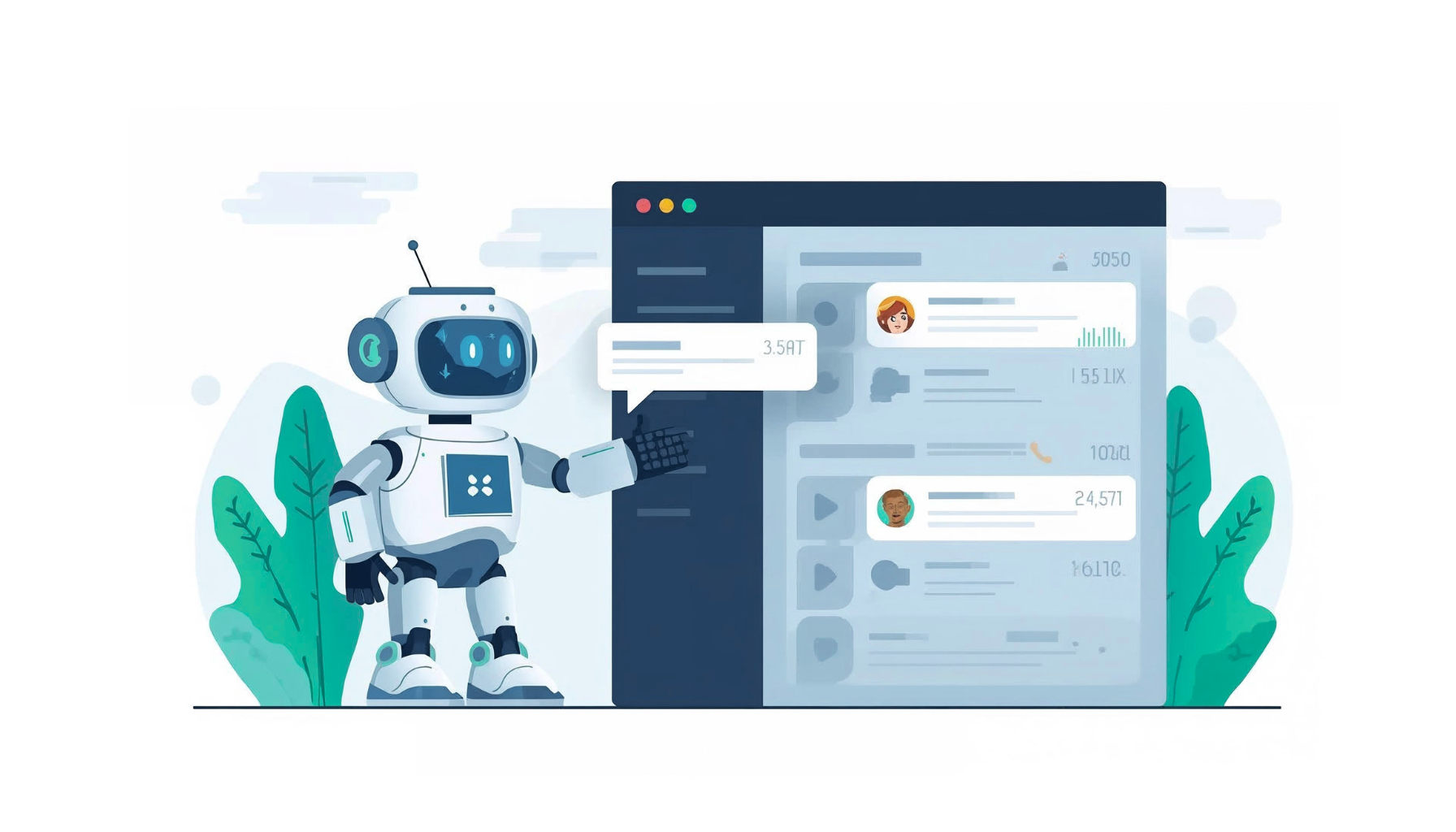
Automating ticket management with AI chatbots
AI chatbots applied to ticketing systems enable the automation of several stages of the customer support process. Key functions include:
- automatic assignment of tickets to the correct department
- intelligent classification of requests based on content
- dynamic prioritization based on urgency and context
In addition, these systems can analyze user requests and identify recurring patterns, allowing them to independently handle a large share of standard and repetitive interactions.
How NLP and RAG improve AI chatbots in ticketing systems
The functioning of AI chatbots in ticketing systems is based on a set of advanced technologies such as machine learning, Natural Language Processing (NLP), and next-generation language models (LLMs).
These technologies enable the system to:
- understand users’ natural language
- interpret the intent behind requests
- detect tone and sentiment in communication
An additional layer of evolution is represented by Retrieval-Augmented Generation (RAG), which enhances chatbot responses by integrating information from external sources or company knowledge bases, improving both accuracy and contextual relevance.
A key element is also continuous learning: each interaction contributes to improving system performance, making responses increasingly accurate over time.
What are the benefits of AI chatbots in ticketing systems?
The adoption of AI chatbots in ticket management systems delivers concrete benefits at both operational and strategic levels.
- Operational efficiency
Automation significantly reduces request handling times and speeds up ticket resolution. - Service scalability
Companies can manage a growing volume of requests without a proportional increase in support staff. - Optimization of human resources
Agents are freed from repetitive tasks and can focus on complex, high-value cases. - Improved customer experience
Users receive faster, more consistent responses available 24/7, also through intelligent self-service systems.
Towards a data-driven and proactive customer support
Beyond automation, AI chatbots in ticketing systems make it possible to turn interaction data into strategic insights. This enables organizations to:
- monitor customer service performance
- identify recurring issues and anticipate future problems
- continuously improve support processes
In this way, customer support becomes not only reactive but also proactive, aligning with business goals and overall brand experience.
Practical example: Rexpondo and the integration of AI chatbots in the ticketing system
In this evolving scenario, solutions such as Rexpondo represent a concrete example of how the integration between AI chatbots and ticketing systems can significantly improve customer support. A relevant case is the ticketing system of AIFA, where the shift toward more intelligent request management has also been enabled by AI integration, as described in the official article dedicated to Rexpondo.
Through integration with Margot, the advanced AI agent of the Rexpondo suite, these capabilities are further enhanced, making support request management more intelligent and context-aware.
Using Natural Language Processing, workflow automation, and a company knowledge base, the system understands requests, responds in real time, and routes complex cases to human operators. The result is faster, more consistent, and more efficient support.

