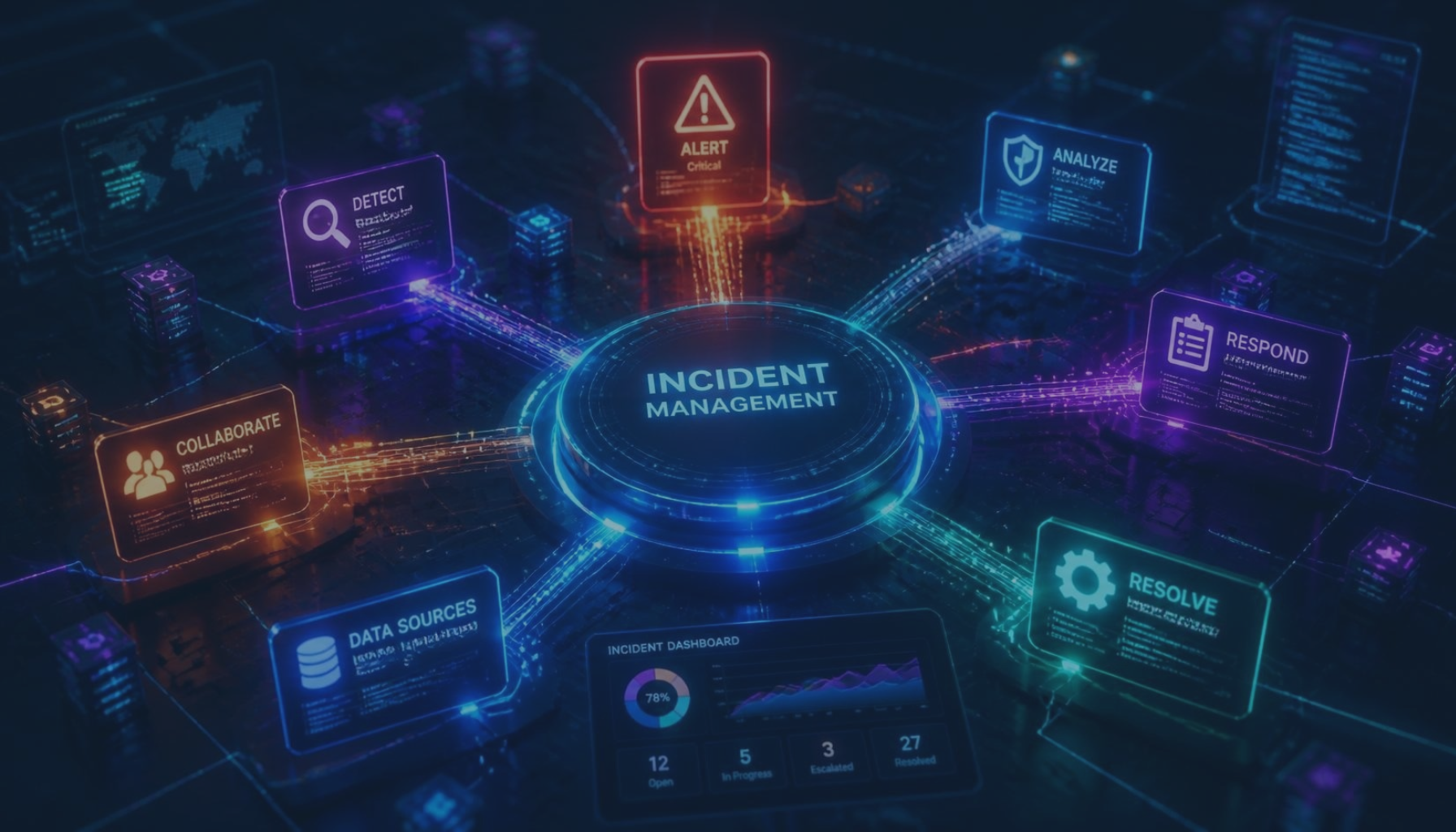
What is Incident Management with AI and why it is changing ITSM
AI-powered Incident Management represents an evolution of the traditional approach to IT incident management. Thanks to the integration of artificial intelligence, organizations can analyze large amounts of data in real time, transforming them into contextualized and useful information to make faster and more effective decisions. This model goes beyond the purely reactive logic of IT Service Management (ITSM), introducing automation, advanced analytics, and intelligent processes that improve efficiency, scalability, and service quality.
Generative AI technologies also help simplify the work of IT operators by automatically interpreting complex logs, summarizing relevant information, and suggesting possible correlations between apparently unrelated events. In this way, analysts receive stronger decision-making support even when managing the most critical incidents.
How AI is transforming Incident Management: improving response and automation
Artificial intelligence is redefining how IT incidents are detected and managed, enabling organizations to identify correlations between events that, when analyzed individually, might not be considered significant. By evaluating the overall context, AI systems can quickly recognize early signs of a compromise and accelerate response activities.
At the same time, automation enables immediate actions through intelligent platforms, such as SOAR systems, which activate preconfigured playbooks for operations such as isolating compromised endpoints, disabling accounts, or launching containment procedures. Algorithms automatically classify thousands of alerts, eliminate a large number of false positives, and prioritize incidents based on actual risk levels and operational context. As a result, less critical incidents can be handled automatically, while IT teams can dedicate time and expertise to more complex and high-impact cases.
IT incident prevention through machine learning and predictive analytics
The use of machine learning allows intelligent systems to create a baseline of normal behavior across users, devices, and IT infrastructures. Any deviation from this model is quickly identified, making it possible to detect anomalies and potential incidents before they lead to significant consequences.
Predictive analytics further extends these capabilities by processing historical data, system logs, and previous incidents to identify recurring patterns, predict potential attack vectors, and highlight vulnerabilities that have not yet been exploited. This approach enables organizations to adopt preventive strategies, strengthening security and reducing the risk of operational disruptions.
Intelligent ticketing and IT workflow automation
Modern Incident Management platforms integrate monitoring, ticketing, and IT workflows into a single automated ecosystem. When a high-priority alert is detected, the system can automatically initiate the operational workflow by creating dedicated communication channels, involving the most appropriate team based on the service catalog, and providing all the necessary information for incident resolution from the beginning.
At the end of the process, automation continues by creating tickets in management tools such as Jira and generating post-mortem drafts using the complete timeline of events collected during the intervention. This reduces manual activities, improves collaboration between teams, and accelerates the entire incident management lifecycle.
Benefits of AI for IT teams and business operations
The adoption of artificial intelligence in Incident Management provides significant benefits for both IT teams and business operations. Automating repetitive activities reduces operational workload and helps mitigate the alert fatigue phenomenon, decreasing the number of irrelevant notifications that operators need to analyze every day.
Moreover, AI’s ability to filter alerts, automatically summarize information, and quickly provide context to involved operators accelerates incident resolution and improves collaboration between different teams. The result is a more efficient organization, capable of managing an increasing number of incidents while maintaining high service levels without a proportional increase in dedicated resources.
Incident management in Rexpondo
Rexpondo is a ticketing and IT Service Management (ITSM) platform designed to support organizations in the management of IT incidents. Its goal is to restore normal service operations as quickly as possible, minimizing business impact and ensuring operational continuity, service availability, and compliance with SLAs.
During incident management activities, Rexpondo also supports the adoption of workarounds, meaning temporary solutions or alternative procedures that allow services to be restored quickly while waiting for the definitive resolution of the underlying issue. This approach helps minimize disruptions and ensures a more reliable service experience for users and organizations.

