- What is Request Management?
- What is Incident Management?
- Request Management vs Incident Management: Differences and Comparison
- Why is it Important to distinguish between Request Management and Incident Management?
- How to Automate Request Management and Incident Management
- Managing Incident Management and Request Management with Rexpondo
What is Request Management?
Request Management is the process that enables organizations to manage formal user requests related to the delivery of new services, information, access, or routine activities in a structured way.
This category includes requests such as password resets or software updates, which are planned and predictable activities generally handled through predefined workflows and a service catalog.
What is Incident Management?
Incident Management is a reactive practice aimed at minimizing the impact of unexpected events or service interruptions by restoring normal operations as quickly as possible.
An incident, such as an unavailable server or an Internet connection outage, requires a rapid response to identify the root cause of the problem and limit its impact on business productivity.
Request Management vs Incident Management: Differences and Comparison
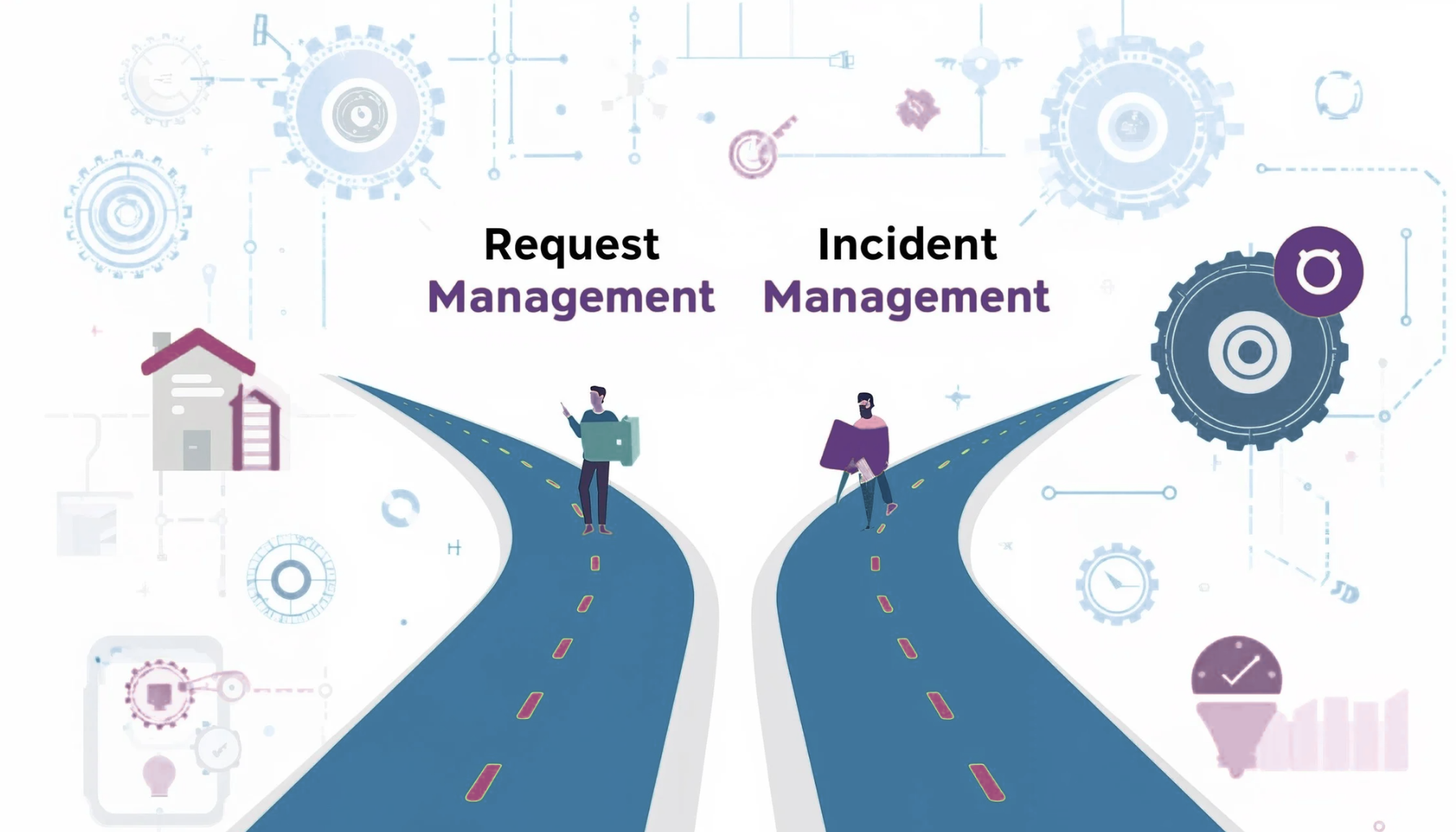
The main difference between the two processes lies in the nature of the event being managed. Incidents are unplanned interruptions that affect the quality of a service, while service requests are formal and expected requests for a standard activity or service.
For this reason, incidents involve a higher level of risk and require timely management, whereas service requests involve a lower level of risk and do not require immediate escalation.
When comparing the two practices:
- Incident Management aims to resolve a problem and restore the service to its normal state, focusing on metrics such as downtime and resolution time.
- Request Management, on the other hand, is designed to efficiently fulfill user requests by monitoring metrics such as request fulfillment time and end-user satisfaction.
Why is it Important to distinguish between Request Management and Incident Management?
Clearly distinguishing Request Management from Incident Management is essential for assigning the right priorities and making the best use of available resources, preventing critical incidents from being delayed by routine service requests.
In addition, this distinction makes reporting more accurate, facilitates IT support cost calculation, and helps reduce team workload, improving the overall quality of the service.
How to Automate Request Management and Incident Management
These processes can be automated by adopting ITSM platforms equipped with Artificial Intelligence and dynamic workflows. In Request Management, repetitive activities such as approvals or password resets can be automated through self-service portals and service catalogs.
In Incident Management, automation supports automatic ticket assignment and prioritization, real-time notifications, and the use of AI for preliminary diagnosis or identifying recurring patterns based on historical data.
Managing Incident Management and Request Management with Rexpondo
An ITSM platform such as Rexpondo enables organizations to centrally manage both incidents and service requests through a structured ticketing system.
The solution supports the management of workflows, priorities, and SLAs, allowing the Service Desk to correctly classify requests, automate recurring activities, and improve response and resolution times. In this way, organizations can optimize IT support management and deliver a more efficient service to end users.

